Out-of-Home, In Control: A UK SME Framework for Pickup-Point Delivery
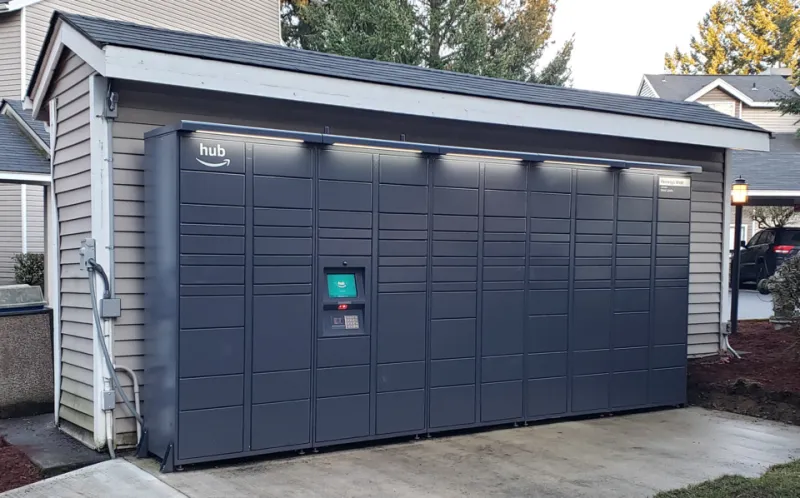
Photo: Masem, CC BY-SA 4.0, via Wikimedia Commons
For many resource-light UK businesses, the doorstep is no longer the only sensible end point for a parcel. Lockers, parcel shops and local retail counters can offer customers a convenient alternative while reducing the cost and friction of repeated home-delivery attempts. Yet out-of-home delivery is not a simple switch. It introduces a new custody chain, new customer instructions and new failure modes. The purpose of this playbook is to treat collection points as a controlled delivery channel rather than an emergency valve.
Begin with the parcel portfolio, not the partner map
Out-of-home collection suits some goods better than others. Before approaching any partner, segment the parcel portfolio by size, value, urgency, fragility and regulatory status. A low-value, non-urgent item that fits a standard locker is a natural candidate. A high-value item, an age-restricted product or a fragile consignment may still be suitable, but only with explicit identity checks, secure storage and a clear liability position. Bulky items and goods that require inspection at handover may be better served by a staffed counter than an unattended locker.
This segmentation prevents a common mistake: adopting collection points as a blanket rule and then discovering that exceptions consume the savings. A simple matrix of product type against collection method will usually reveal where out-of-home delivery is operationally credible and where it is merely convenient to propose.
Selecting a partner with operational substance
Partner selection should be based on service design, not just network size. Coverage matters, but density near the customer base matters more. A network with thousands of sites is less useful if the nearest viable point is a bus ride away for a significant share of customers. Review opening hours, including evenings and weekends, and check whether the site can accept the parcel dimensions and weights that appear in the sales mix.
Scan quality is equally important. A partner that records intake, storage and collection with reliable barcode scans gives the sender an audit trail. A partner that relies on manual notes creates ambiguity when a customer says the parcel was never available. Ask prospective partners about dwell time, storage limits, proof-of-collection records, age and identity verification, accessibility for customers with limited mobility, and the process for returning uncollected items.
Contract terms deserve attention. Confirm when risk passes, what insurance the partner holds, how claims are raised and what service credits or remedies apply for mis-scans, lost items or early disposal. Data protection also belongs in the review: customer name, address, mobile number and order details may need to be shared with the collection site. The lawful basis, minimisation and retention of that data should be documented rather than assumed.
A short pilot in a representative postcode area is often more informative than a national launch. Track collection rates, dwell time, exception volumes and customer contacts per hundred parcels. Visit a sample of sites or use a mystery-shopping exercise to confirm that the counter experience matches the contract.
Communication that prevents stale parcels
Most collection-point failures begin before the parcel arrives. Customers may not understand the opening hours, may forget to bring identification, or may assume the parcel will be held indefinitely. The sender should set expectations at checkout and repeat them at dispatch. Plain English is essential: where the point is, when it is open, what the customer must bring, how long the parcel will be held and what happens if it is not collected.
Offering out-of-home delivery as a clear choice, rather than a silent substitution, protects trust. If there is a fee or a different delivery promise, state it plainly. Reminders before the collection deadline are useful, but they should be timed to the partner's actual storage window, not to a generic schedule. A customer who receives a reminder after the parcel has been returned will contact the business, not the partner.
For age-restricted or high-value goods, the instruction set needs an additional layer. Explain the identification requirement and the consequence of a failed collection. For business customers, confirm who is authorised to collect. These details reduce disputes at the counter and give the support team a defensible record.
Liability, custody and the handover record
The central question is simple: who is responsible for the parcel at each stage? The carrier may retain responsibility until intake at the collection point, the partner may assume responsibility for storage and release, and the sender may retain obligations to the customer. These positions should be written into the contract and reflected in insurance arrangements. Do not assume that goods-in-transit cover automatically extends to a third-party storage site.
Proof of collection is the practical safeguard. A scan, signature or verified collection code creates a record that can be used in a claim or customer conversation. The partner should also have a process for mis-release, damage discovered at collection and parcels that cannot be stored safely. Where the partner is a small retailer, the sender may need to provide labelled storage bags, clear shelf markings and a simple exception log.
Data sharing should be limited to what the collection process requires. The partner does not need the full order history to hand over a parcel. A collection reference, customer name and verification requirement are usually sufficient. This minimises privacy risk and reduces the chance of inconsistent information being given at the counter.
Exception handling without a standing crisis
Define the exceptions before launch. Typical cases include a parcel that fails intake scanning, a customer who arrives after the storage deadline, a mis-scan at collection, a damaged item discovered at the counter, a site closure and an age-verification refusal. Each needs an owner, a response time and a customer script.
A daily exception report is more useful than a monthly reconciliation. It allows the support team to contact the customer before the parcel is returned and to identify whether the problem sits with the carrier, the partner or the order data. Reconcile partner invoices against collected and returned parcels, and review repeat exceptions by site. A single site with persistent scanning problems can undermine a whole regional rollout.
Returns deserve a place in the same process. If a customer refuses a parcel at collection, the item should re-enter the reverse logistics flow with the same scan discipline as any other return. Otherwise the business loses visibility at the point where cost begins to accumulate.
The cost test: collected parcel versus failed attempt
Collection points should be judged on total cost per successful outcome, not on the headline partner fee. A practical comparison uses two measures:
| Measure | Costs to include |
|---|---|
| Cost per collected parcel | Partner fee, label or handling cost, customer communication, admin time, partner management and reconciliation |
| Cost per failed home attempt | First attempt cost, redelivery cost, contact-centre time, refund or replacement risk and lost margin |
Calculate each measure over the same cohort of orders. Then test the break-even point. As an illustration, if routing a parcel to collection costs £4 in total and a failed delivery plus redelivery costs £12, the collection route is cheaper once it prevents one failed attempt for every three parcels routed. The figures will vary by carrier, product and customer base, but the logic holds: compare the cost of the channel against the cost of the failure it displaces.
Run the comparison over at least four weeks and include fixed costs such as integration and staff training. Track the collection rate, the return-to-sender rate and the number of customer contacts per hundred parcels. A channel that looks cheap per parcel can become expensive if it generates a steady stream of support queries.
For UK SMEs, out-of-home delivery is most effective when it is selective, well communicated and contractually clear. ACI Express treats collection points as part of last-mile performance, not a side arrangement. The businesses that benefit most are those that choose the right parcels, set expectations early and keep a firm hand on custody and exceptions.