Lens on Liability: A Defensible Photo Proof-of-Delivery Standard for UK SMEs

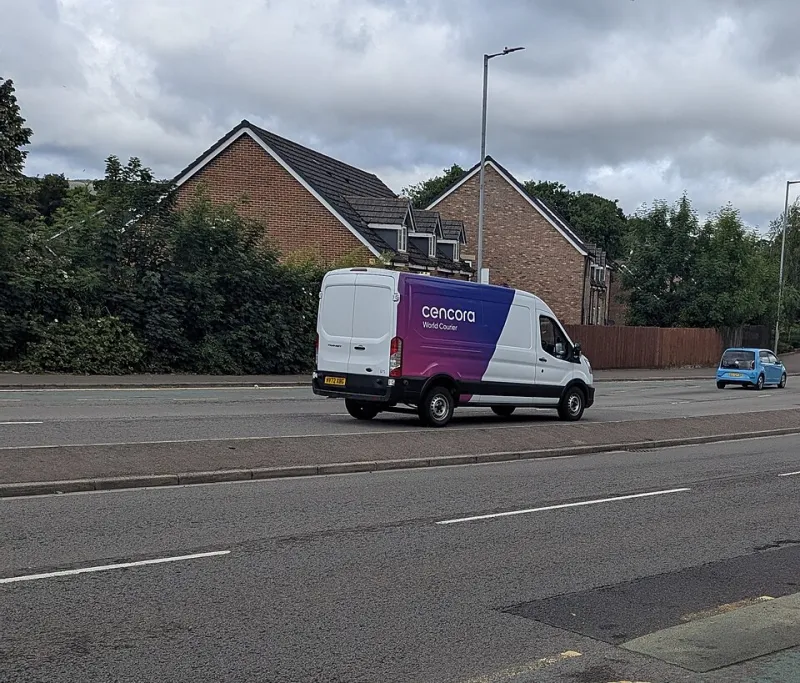
Photo: User:ToprakM, CC BY 4.0, via Wikimedia Commons
A photograph at the point of delivery has become a familiar part of the UK parcel experience. It reassures some customers, satisfies some courier systems and, in principle, gives a sender something concrete to review when a delivery is disputed. In practice, however, many delivery photographs are too casual to carry evidential weight. A close-up of a parcel against an anonymous wall may show that a parcel existed, but it does not show where it was left, whether the address was correct, or whether the placement matched the customer's instructions.
As of November 2026, the commercial case for a clearer standard is straightforward. Failed-delivery disputes consume customer-service time, damage margin and can lead to refunds or replacements that may not be justified. A consistent photo proof-of-delivery standard does not eliminate disagreements, but it gives couriers, customers and claims teams a shared basis for resolving them.
Begin with the question the photograph must answer
A useful delivery photograph should help someone who was not present answer four questions. Was the parcel left at the correct address or agreed location? Was it left in the condition in which it was despatched? Was the placement consistent with the customer's instructions? And can the date and time be established from the delivery record?
If the image cannot support those questions, it is decoration rather than evidence. The standard should therefore be written around dispute prevention, not around the courier's camera or the delivery app. That distinction matters because a photograph taken for convenience may capture too little context, while a photograph taken without care may capture too much personal data.
What a useful delivery photograph should show
A defensible image normally combines context and detail. The parcel should be visible in its final position, with enough surroundings to identify the type of location: a front door, a doorstep, a communal entrance, a reception desk or a loading bay. Where the customer has specified a safe place, the photograph should show the parcel at that place, not merely near it.
The label or tracking reference should be legible enough to link the image to the consignment, but personal data should not be unnecessarily exposed. Couriers can angle the parcel so that the barcode or tracking fragment is visible while names, telephone numbers and full addresses are obscured. A short sequence of two images may be more useful than one: a wider frame for location and a closer frame for parcel identity. The sequence should be recorded against the same delivery event.
Timestamping should come from the delivery system rather than from a handwritten note. Where geo-location is captured, it should be used for verification and exception handling, not published to the customer or retained without purpose. The standard should also specify what not to photograph: people, open interiors, neighbouring doorways, vehicle number plates, computer screens and whiteboards.
Privacy, UK GDPR and proportionate evidence
Delivery photographs can contain personal data. An image of a named doorbell, a flat number, a person or an identifiable home may engage the UK GDPR and the Data Protection Act 2018. The standard should therefore be built on purpose limitation and data minimisation. The purpose is delivery verification and dispute resolution; the image should contain no more than is needed for that purpose.
SMEs should document the lawful basis for processing delivery images, include the practice in customer and courier privacy notices, set a retention period and restrict access to the claims or customer-service team. Couriers should be instructed not to photograph individuals and not to capture the inside of a customer's home. Where a delivery is made to a shared entrance, the photograph should be tightly framed to avoid other residents' post, names or doorbells.
This is not a reason to abandon photo proof. It is a reason to make the photograph proportionate. A tightly framed image of a parcel at an agreed safe place, supported by a system timestamp and tracking reference, is usually more defensible than a wide street scene that captures unrelated personal data.
Instructions for flats, shared entrances and business parks
Flats require particular care. If the customer has agreed a safe place inside a communal hallway, the courier should photograph the parcel at that place without capturing neighbouring doors or names. If no safe place has been agreed, the courier should not improvise by leaving the parcel in an insecure communal area simply to obtain a photograph. The delivery record should state that the parcel was not left and why.
Shared entrances should be photographed from an angle that shows the building entrance or buzzer panel only where necessary. Other residents' post and nameplates should be avoided. For business parks, a photograph at reception should include the parcel and enough reception signage to identify the location, while avoiding visitor screens, staff names and access codes. The recipient's name should be recorded in the delivery data, not relied upon from the image alone.
Courier instructions should be short, visual and specific. A one-page card with three acceptable examples and three unacceptable examples will often be more effective than a long policy document. The card should be reinforced in induction and reviewed in monthly audits.
Turning the standard into an operating routine
A photo proof-of-delivery standard only works if it is audited. Each week, an SME can sample a small number of delivery images against a simple checklist: address or location visible, parcel visible, label or tracking reference legible, no unnecessary personal data, timestamp present and consistency with customer instructions. Exceptions should be logged and fed back to the courier or account manager.
The same checklist should guide dispute handling. When a customer says a parcel did not arrive, the claims team should review the image, the delivery timestamp, the address data and any safe-place instruction before deciding the next step. A strong photograph may support a reasoned response; a weak one should prompt investigation rather than a blanket denial.
The aim is not to win arguments with customers. It is to reduce the number of arguments that need to be had. A clear standard, applied consistently, gives UK SMEs a more reliable record of what happened at the door and a fairer basis for resolving the cases where the account is disputed.