Drawing the Line: Postcode Delivery Zones That Defend Margin and Keep Customers Onside
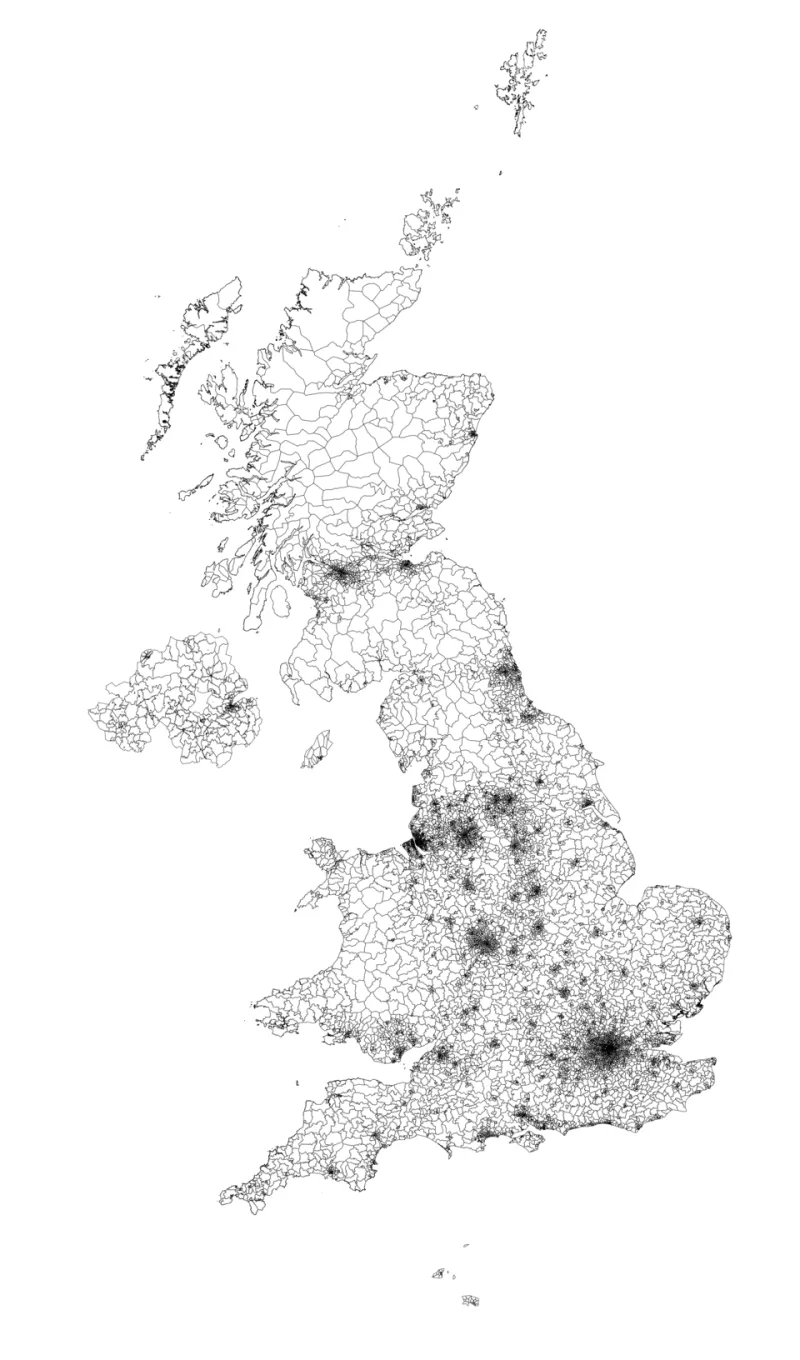
Photo: Anameofmyveryown, CC BY-SA 3.0, via Wikimedia Commons
Delivery zones are often treated as a pricing tactic. In practice, they are an operating map. They show where a parcel is cheap to serve, where it is expensive and where a promise needs to be adjusted. For a resource-light UK SME, a clear zone structure can protect margin without raising prices for every customer.
Start with cost-to-serve, not competitor prices
A zone map should begin with invoices, not assumptions. Pull the last 12 weeks of orders and carrier invoices. Match each order to its outward postcode—the first part of the postcode, such as SW1 or EH7. Compare the carrier charge, any surcharge, packaging cost, labour time, payment fees and the cost of failed deliveries or returns. The result is a cost-to-serve figure for each postcode district.
Some patterns will be obvious. Dense urban districts usually benefit from lower line-haul costs and higher drop density. Rural and remote districts often carry surcharges, longer transit times and higher failure rates. Islands and some Highland postcodes may sit in a separate tier. The point is not to penalise rural customers. It is to stop a low-margin order in a high-cost area from being subsidised by every other order.
Build three or four zones, not twenty
A practical small-business model uses three or four bands. Zone A might cover core urban districts with next-day or two-day service. Zone B covers extended areas with a two-to-three-day promise. Zone C covers rural and remote districts with a longer promise and, where the carrier allows, a transparent surcharge. Zone D can cover islands and exceptional locations, often with a longer lead time or a collection point option.
The bands should be based on cost and service reliability, not arbitrary geography. If a district has consistent next-day performance and a reasonable cost per parcel, it belongs in the faster band even if it is not inside a city. If a nearby district has repeated delays, it may need a longer promise regardless of distance.
Use thresholds and choices before surcharges
A surcharge is only one lever. Minimum-order thresholds can protect margin by encouraging larger baskets. A free-delivery threshold set just above the zone's average order value can improve economics without making small orders loss-making. For high-cost zones, offer a choice: pay the surcharge, accept a consolidated delivery day or collect from a local point. Choice preserves goodwill. A surprise charge at checkout does not.
Be explicit about what the threshold includes. If returns are common in a category, factor that into the threshold. If products are bulky, use volumetric weight rather than sale value alone. The aim is a delivery policy that reflects the real cost of the basket, not just the postcode.
Promises should match carrier reality
Zone-specific promises are a competitive advantage when they are honest. A next-day promise in a remote district may be technically possible but operationally fragile. A clear two-to-three-day promise in that zone can reduce failed deliveries, customer contacts and refunds. Use the carrier's performance data by postcode to set the promise. Then check it monthly.
At checkout, show the zone and the expected delivery window before payment. Do not bury the surcharge in the final step. Explain the reason in plain terms: 'This postcode is outside our standard delivery area, so a £4.95 delivery contribution applies.' The customer may still buy. If they do not, the business has avoided a loss-making order.
A seven-step zone audit
- Export 12 weeks of orders, delivery postcodes and carrier invoices.
- Group orders by outward postcode and calculate cost per parcel.
- Add packaging, labour and expected returns cost to reach cost-to-serve.
- Compare cost-to-serve with gross margin by order and by zone.
- Identify the 10% of postcodes that generate the highest delivery cost or failure rate.
- Set three or four zones, thresholds and promises, then test the checkout wording.
- Review monthly against conversion, average order value, delivery cost as a share of revenue and repeat purchase rate.
Keep the customer in view
Zones can improve margin, but they can also damage trust if they feel arbitrary. Publish the policy in clear language. Offer alternatives in high-cost areas. Review the map when carrier rates change or when a new route improves service. And keep an eye on conversion by zone: if a surcharge cuts sales more than it protects margin, the model needs adjustment.
For SMEs, the goal is not to charge more everywhere. It is to charge accurately where cost is higher, keep attractive terms where service is efficient and make the promise match the operation. A zone map built on real cost-to-serve does that. It turns delivery from a blanket cost into a managed part of the commercial model.
ACI Express works with UK SMEs on delivery operations and commercial support. The best zone map is the one that can be explained in a sentence, updated with real invoices and defended at the checkout. Clarity protects margin and keeps customers onside.